
Business
WEDC Board of Directors
By Katherine Langford
Advertisement · Why this ad?
Katherine oversees editorial operations across all six brands. Before joining The Meridan Group, she spent 14 years at the Minneapolis Star Tribune, where she led the metro desk through its digital transformation. She holds a Master's in Journalism from Northwestern's Medill School.
More from Katherine →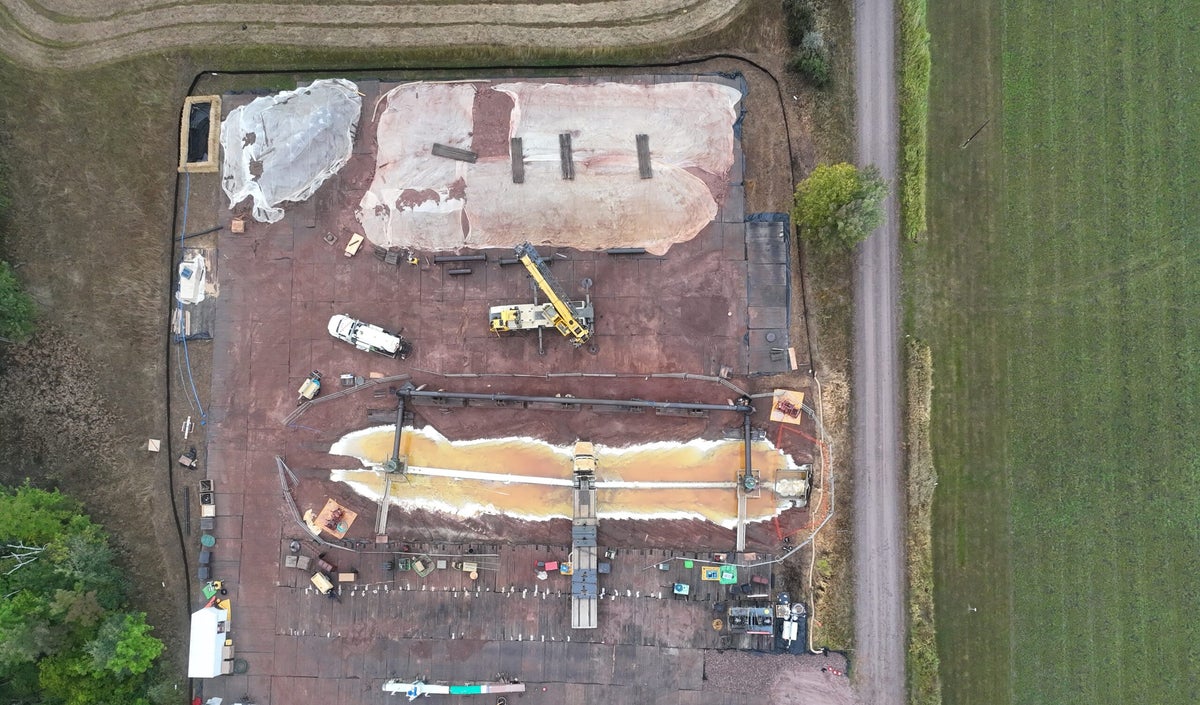
The quiet of the northern Wisconsin landscape was disrupted in late August by a significant release of natural gas liquids, a stark reminder of the potential risks inherent in energy infrastructure. More than 1.3 million gallons of natural gas liquids were released into the air when a subcontractor’s flatbed truck rolled into an open construction trench on Enbridge’s Line 5 pipeline, an incident now the state’s largest oil and gas pipeline spill in over 50 years. Wisconsin Public Radio is reporting on the ongoing remediation efforts, and the incident underscores the importance of diligent oversight in projects that impact our environment and communities.
The incident occurred on August 25th while Enbridge was constructing a new 41-mile segment of Line 5, intended to reroute the pipeline around the Bad River Band of Lake Superior Chippewa’s reservation in Ashland and Iron counties. According to Enbridge spokesperson Juli Kellner, an unoccupied flatbed truck belonging to a subcontractor rolled into an open construction trench, striking the pipeline. The release of 1.3 million gallons of natural gas liquids into the atmosphere has prompted significant environmental and regulatory scrutiny. The company has been actively engaged in soil sampling and excavation to remove contaminated material, a process ongoing as of this report.
Christine Sieger, remediation and redevelopment director with the Wisconsin Department of Natural Resources (DNR), explained that “If those samples come back with exceedances, then they’re continuing to scrape and excavate to move more of that contaminated material off-site.” Sieger emphasized that Enbridge has committed to removing any material exceeding state standards. Approximately 4,275 tons of contaminated soil and debris were removed last month and disposed of at Waste Management’s Timberline Trail Landfill in Weyerhaeuser, while about 4,500 gallons of water mixed with firefighting foam (not containing PFAS) were taken to the Reworld Fox Valley/Oshkosh Material Processing Facility in Winneconne. The immediate focus has been on containing the spill and preventing further contamination.
Initial testing revealed the presence of volatile organic compounds (VOCs) and polycyclic aromatic hydrocarbons (PAHs), common components of petroleum products, within the soil. More concerningly, benzene, a known carcinogen, was detected above state residual contaminant levels designed to protect groundwater. A temporary monitoring well also exceeded groundwater standards for benzene, prompting further action from Enbridge and oversight from the DNR. “Enbridge would be taking action with respect to elevated levels,” Sieger stated, adding that the company’s work is only just beginning. The long-term implications for groundwater quality remain a key concern.
While direct quotes from residents of Saxon and surrounding communities are not available in the reporting, the incident has undoubtedly raised concerns about the safety and environmental impact of the Line 5 pipeline project. The scale of the release – 1.3 million gallons – is difficult to comprehend and understandably unsettling for those living near the affected area. The reliance on subcontractors for construction work highlights the importance of rigorous safety protocols and oversight at all levels of a large-scale project, especially when it involves potentially hazardous materials. The incident also brings into focus the delicate balance between economic development and environmental protection, a conversation frequently occurring in rural Wisconsin communities.
The rerouting of Line 5 was initially intended to address concerns from the Bad River Band of Lake Superior Chippewa, whose reservation the original pipeline route crossed. However, this incident underscores the ongoing complexities and potential risks associated with such large-scale infrastructure projects. The Wisconsin Department of Natural Resources is actively seeking input from 11 federally recognized tribes in Wisconsin, as well as the Brothertown Indian Nation and Great Lakes Indian Fish and Wildlife Commission, demonstrating the importance of tribal consultation and understanding the unique perspectives of those most directly impacted. The Bad River Band’s website provides further information on their perspective regarding the pipeline.
The immediate focus remains on soil remediation and groundwater monitoring. Enbridge has submitted plans to backfill the site with crushed rock topped with soil, a process the DNR hopes to complete by the end of the year. The agency is actively seeking input from tribal nations and other stakeholders regarding these plans. Beyond the immediate cleanup, a full site investigation will be conducted to assess the extent of groundwater, surface water, and sediment contamination and to understand how the contamination was transported from the spill site. This investigation will be crucial for developing long-term remediation strategies.
The Wisconsin Department of Natural Resources issued a notice of violation against Enbridge for alleged violations of state environmental laws related to the spill and construction activities, including the construction of a temporary bypass without state approvals. An enforcement conference was initially scheduled for October 26th, and the agency is currently considering enforcement options. Enbridge maintains it takes these concerns seriously and is working to address them, as well as complying with a corrective action order from the Pipeline and Hazardous Materials Safety Administration.
Work is also ongoing to address groundwater released as part of installing pipe directly underneath the Marengo River. Enbridge reports that groundwater flow at the work site has decreased significantly, with no measurable environmental impacts to the river. A DNR spokesperson confirmed that groundwater flows have decreased to roughly half a gallon per minute, though it remains unknown whether an aquifer breach occurred. Three monitoring wells have been installed along the length of the pipe to help understand the source of the release, demonstrating the ongoing commitment to assessing and mitigating potential environmental impacts.
The Line 5 pipeline, which carries up to 23 million gallons of oil daily from Superior to Sarnia, Ontario, is now more than 90 percent complete. Enbridge anticipates the project will be wrapped up in the first few months of next year. The company estimates that the gas leak on Line 5 will cost $15 million. The incident also prompted an FBI investigation into a fire at a drill rig on the Line 5 project in northern Wisconsin, highlighting the broader safety and security concerns surrounding the pipeline’s construction.
This incident with the Line 5 pipeline serves as a sobering illustration of the inherent risks associated with large-scale infrastructure projects, particularly those involving energy transportation. While rerouting the pipeline was intended to address concerns from the Bad River Band, the recent spill highlights that even carefully planned projects can have unforeseen consequences. The reliance on subcontractors underscores the critical need for robust oversight and adherence to safety protocols at every level of operation – a responsibility that extends beyond Enbridge to include all parties involved in the construction process. It’s a reminder that progress and economic development should never come at the expense of environmental stewardship and the well-being of our communities.
The detection of benzene, a known carcinogen, is particularly concerning and demands rigorous monitoring and remediation efforts to protect our groundwater resources. It’s crucial that tribal concerns are not just heard but genuinely incorporated into the long-term management of the pipeline and the surrounding environment. As a community, we must remain vigilant in holding companies accountable for their environmental responsibilities and advocating for policies that prioritize the safety and sustainability of our natural resources. The stability of families and communities is inextricably linked to the health of our environment; one cannot thrive without the other.
Residents seeking more information about the Line 5 project or the spill can find resources from the following organizations:
Understanding Wisconsin, Together.
WPR’s “Wisconsin Today” newsletter keeps you connected to the state you love without feeling overwhelmed. No paywall. No agenda. No corporate filter. Subscribe here.
This field is for validation purposes and should be left unchanged.
Wisconsin Public Radio, © Copyright 2026, Board of Regents of the University of Wisconsin System and Wisconsin Educational Communications Board.
By Katherine Langford

By Marcus Chen
By Marcus Chen

By Katherine Langford